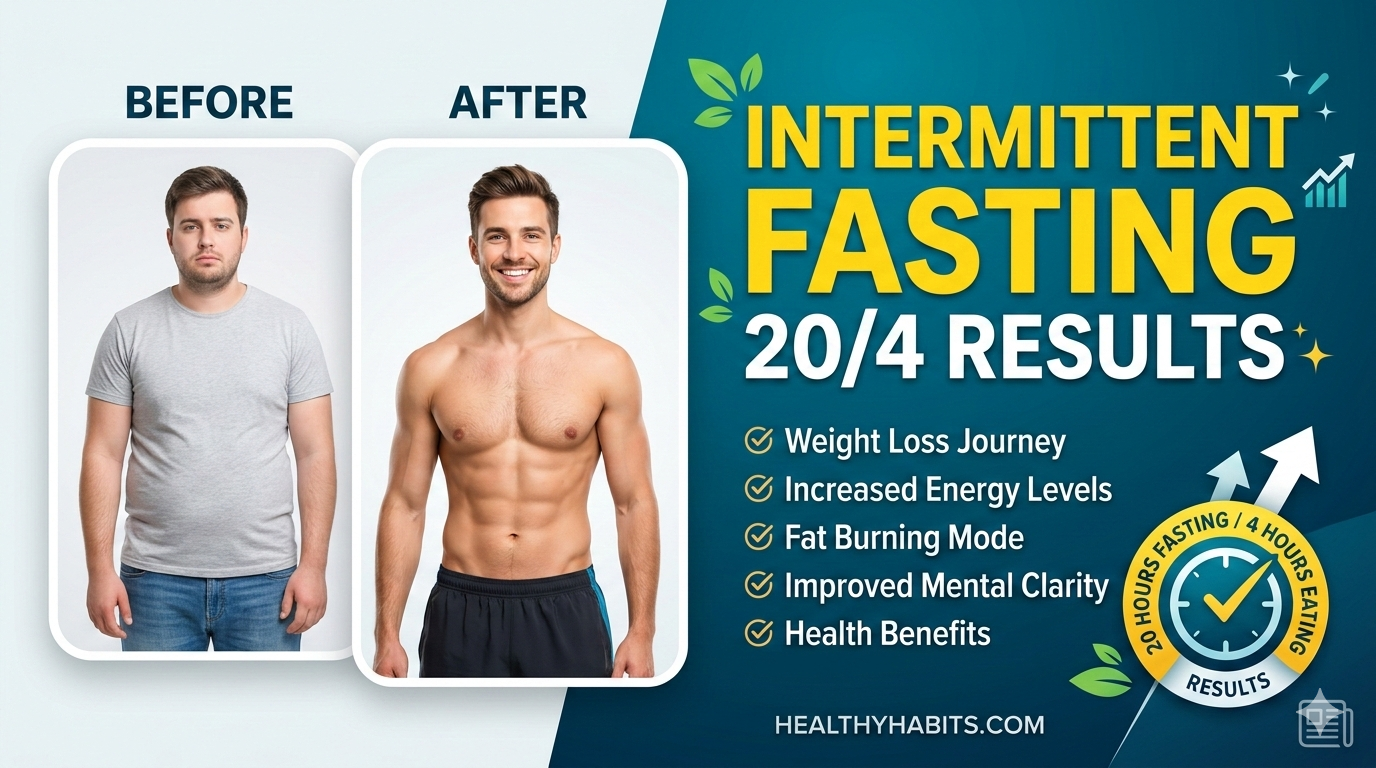
Intermittent fasting 20/4 has quietly become one of the most searched fasting protocols online — and for good reason. People who stick with it report some of the most dramatic results of any eating schedule out there. But what does the research actually say? And what can you realistically expect?
In this guide, we break down the real intermittent fasting 20/4 results you can expect week by week — including weight loss, energy changes, side effects, and long-term health benefits. Whether you’re a complete beginner or you’ve already tried 16/8 fasting and want something more powerful, you’ll find everything you need here.
What Is the 20/4 Intermittent Fasting Protocol?
The 20/4 intermittent fasting method means you fast for 20 hours each day and eat all your food within a 4-hour window. It’s also called the Warrior Diet, a term popularized by fitness author Ori Hofmekler, inspired by ancient warrior eating patterns.
Unlike the popular 16/8 protocol — where you fast for 16 hours and eat for 8 — the 20/4 method is far more restrictive. You typically have one main large meal, plus a small snack or two within your eating window. Some people eat from 4 PM to 8 PM, while others prefer noon to 4 PM, depending on their lifestyle.
| ⚡ Quick Overview: 20/4 Fasting at a Glance Fasting period: 20 hours Eating window: 4 hours (e.g., 4 PM – 8 PM) Meals per day: 1 main meal + optional small snack Also known as: Warrior Diet, extended time-restricted eating Best for: Experienced fasters, people who prefer fewer meals, weight loss goals |
Intermittent Fasting 20/4 Results: A Week-by-Week Breakdown
Results from the 20/4 fasting protocol don’t happen overnight. Here’s a realistic timeline of what most people experience when they stick to this eating schedule consistently.
Week 1: Adjustment and Initial Weight Loss
Most beginners feel the biggest challenge in the first week. Your body is used to receiving food every few hours, so switching to a 20-hour fast creates a noticeable shift.
Common experiences in week 1:
- Hunger spikes around your usual meal times
- Headaches, fatigue, or brain fog (often called the “fasting headache” or keto flu)
- Irritability, especially in the morning hours
- Rapid initial weight loss of 2–5 lbs — mostly water weight and glycogen stores
- Improved sleep quality reported by many people
Important: The weight you lose in week 1 is primarily water weight. Real fat loss begins in weeks 2 and 3.
Week 2–3: Fat Burning Begins
By the second week, your body starts to adapt to the extended fasting state. Glycogen stores in your liver begin to deplete more regularly, and your body shifts toward burning fat for energy — a process known as metabolic switching.
What you’ll likely notice:
- Hunger starts to stabilize and becomes much more manageable
- Steady fat loss — typically 0.5 to 1.5 lbs per week if in a caloric deficit
- Increased mental clarity and focus during fasting hours
- Reduced bloating and significantly better digestion
- Early signs of improved insulin sensitivity
Research on time-restricted eating shows that eating within a narrower window can significantly reduce caloric intake naturally — many people eat 20–30% fewer calories simply by limiting their eating window, without counting a single calorie.
Week 4–6: Visible Body Composition Changes
This is the phase where most people start to see and feel real, visible results from 20/4 intermittent fasting.
- Total weight loss of 4–10 lbs from baseline (varies by individual)
- Noticeable reduction in belly fat and waist circumference
- Clothes fitting looser, especially around the midsection
- Energy levels stabilize — afternoon energy crashes become less frequent
- Reduced cravings for sugar and processed foods
- Some people report onset of autophagy benefits — cellular repair that occurs during extended fasting
| 📊 Average 20/4 Fasting Results (Based on User Reports & Studies) Week 1: 2–5 lbs lost (mostly water weight) Week 2–3: 1–3 lbs of actual fat loss begins Week 4–6: 4–10 lbs total, visible body composition changes Month 3+: 10–20+ lbs lost, measurable metabolic health improvements Note: Results depend on caloric intake, starting weight, activity level, and consistency. |
Month 3 and Beyond: Long-Term Results
People who stay consistent with the 20/4 fasting protocol for 3 months or longer often report some of the most significant health transformations.
- Sustained fat loss of 15–25 lbs or more
- Improved fasting blood glucose and insulin levels
- Lower LDL cholesterol and triglycerides in some individuals
- Reduced chronic inflammation markers
- Greater mental discipline and a healthier relationship with food
- Possible increase in human growth hormone (HGH) production
Health Benefits of 20/4 Intermittent Fasting
Beyond weight loss, the science behind 20/4 fasting points to a range of broader health benefits:
1. Improved Insulin Sensitivity
One of the most well-documented benefits of extended fasting is improved insulin sensitivity. When you fast for 20 hours, blood insulin levels drop significantly. Over time, this trains your body to use insulin more efficiently — key for preventing type 2 diabetes and metabolic syndrome.
2. Autophagy and Cellular Repair
Extended fasting — especially 18+ hours — is strongly associated with triggering autophagy, a cellular cleanup process where your body breaks down and recycles damaged proteins and organelles. This is why fasting research is being studied in the context of aging, neurological health, and cancer prevention.
3. Reduced Inflammation
Chronic inflammation is linked to heart disease, arthritis, and metabolic disorders. Studies on time-restricted eating show measurable reductions in inflammatory markers, including C-reactive protein (CRP), after consistent fasting periods.
4. Cardiovascular Health
The 20/4 fasting protocol has shown promise in improving key cardiovascular markers: lower blood pressure, reduced triglycerides, and improved cholesterol profiles. These effects are amplified when combined with a whole-food, nutrient-dense diet within the eating window.
20/4 Fasting vs. 16/8: Which Gets Better Results?
A common question people ask: is 20/4 fasting significantly better than 16/8?
| 🆚 20/4 vs. 16/8 Intermittent Fasting Compared Fasting window: 20/4 = 20 hrs | 16/8 = 16 hrs Eating window: 20/4 = 4 hrs | 16/8 = 8 hrs Fat loss speed: 20/4 = Faster | 16/8 = Moderate Autophagy: 20/4 = Higher | 16/8 = Moderate Difficulty: 20/4 = Hard | 16/8 = Moderate Best for: 20/4 = Experienced fasters, faster results 16/8 = Beginners and moderate weight loss goals |
The 20/4 protocol does produce faster results, particularly for fat loss and metabolic changes, but it’s significantly harder to sustain. Most nutritionists recommend starting with 16/8 for at least 4–6 weeks before transitioning to 20/4, especially if you have no prior fasting experience.
Potential Side Effects of 20/4 Intermittent Fasting
Intermittent fasting 20/4 is not without challenges, particularly in the early stages. Being aware of potential side effects helps you plan accordingly.
- Intense hunger pangs in the first 1–2 weeks
- Headaches and dizziness (usually from electrolyte imbalance — increase sodium, potassium, magnesium)
- Low energy and difficulty concentrating early on
- Irritability and mood changes — especially before meals
- Risk of overeating during the eating window if meals aren’t planned in advance
- Muscle loss if protein intake is too low (aim for 0.7–1g per lb of body weight)
- Not suitable for people with a history of disordered eating
| ⚠️ Who Should NOT Try 20/4 Fasting • Pregnant or breastfeeding women • People with type 1 diabetes or insulin-dependent diabetes • Individuals with a history of eating disorders • Those under 18 years of age • People who are underweight (BMI under 18.5) Always consult a healthcare provider before starting any fasting protocol. |
Tips to Maximize Your 20/4 Intermittent Fasting Results
Getting great results from the 20/4 protocol comes down to more than just watching the clock. Here’s how to make the most of your eating window and fasting period.
What to Eat During Your 4-Hour Window
Your eating window is precious — make it count with nutrient-dense whole foods:
- Lean proteins: chicken, fish, eggs, Greek yogurt (critical for muscle preservation)
- Complex carbohydrates: sweet potatoes, brown rice, oats (timed around workouts)
- Healthy fats: avocado, olive oil, nuts and seeds
- Plenty of vegetables and leafy greens for fiber and micronutrients
- Avoid ultra-processed foods, alcohol, and excessive sugar — these spike insulin and undermine fasting benefits
What You Can Have During the Fast
- Water — essential. Drink at least 2–3 liters throughout the fasting period
- Plain black coffee or green tea (no sugar, no milk)
- Sparkling water or herbal teas
- Electrolyte supplements (sodium, potassium, magnesium) to prevent headaches
Exercise Timing
Many people who follow the Warrior Diet prefer to work out toward the end of the fasting window, just before eating. This can enhance fat burning and allows for immediate post-workout nutrition. However, morning workouts are also effective — listen to your body and adjust accordingly.
Real People, Real Results: What to Expect
Based on community reports and documented experiences, here’s a realistic picture of what people experience with consistent 20/4 fasting:
- A 35-year-old man lost 22 lbs over 10 weeks while maintaining muscle mass through adequate protein intake
- A woman in her 40s reported 14 lbs of fat loss in 8 weeks, along with significantly reduced bloating and better sleep
- Beginners with 30+ lbs to lose often see the fastest initial results — 10–15 lbs in the first month
- Leaner individuals (less than 15 lbs to lose) see slower but consistent fat loss of 0.5–1 lb per week
Disclaimer: Individual results vary. Factors like starting weight, diet quality, activity level, age, hormones, and consistency all influence your personal 20/4 fasting results.
Frequently Asked Questions About 20/4 Fasting Results
How quickly will I see results with 20/4 fasting?
Most people notice changes within the first 2–3 weeks. Initial weight loss begins in week 1 (mostly water weight), with visible fat loss typically starting around weeks 3–4.
Can I do 20/4 fasting every day?
Many experienced fasters do practice 20/4 daily. However, starting with 4–5 days per week and gradually building up is a smarter approach, especially for beginners.
Will 20/4 fasting cause muscle loss?
Only if your protein intake is insufficient. Consuming 0.7–1g of protein per pound of body weight during your eating window, combined with resistance training, is highly effective at preserving lean muscle mass even during extended fasts.
Is 20/4 fasting better for women?
Some research suggests women may be more sensitive to prolonged caloric restriction and hormonal changes from aggressive fasting schedules. Women often do well starting with 14/10 or 16/8, then transitioning to 20/4 gradually. Tracking energy levels and menstrual cycle changes is especially important.
Does 20/4 fasting put you in ketosis?
After a 20-hour fast, most people deplete liver glycogen and begin producing ketone bodies — a mild, transient form of ketosis. This contributes to mental clarity and accelerated fat burning. It’s not full nutritional ketosis (as seen in the ketogenic diet), but the metabolic overlap is significant.
Final Thoughts: Are 20/4 Fasting Results Worth It?
If you’re looking for a fasting protocol that delivers real, measurable results — in weight loss, body composition, mental clarity, and metabolic health — the 20/4 intermittent fasting approach is hard to beat.
The results won’t come overnight, but with consistency, proper nutrition during your eating window, and patience through the first two weeks of adjustment, most people find that the 20/4 protocol delivers on its promises.
Start slow, track your progress, and remember that the goal isn’t just weight loss — it’s building a sustainable, long-term relationship with food that supports your overall health. The Warrior Diet, done right, can be one of the most powerful tools in your wellness toolkit.